

Ideas on Customized Classroom
A customized classroom is one where students feel supported to learn in ways that fit them best. It combines clear expectations and consistent grading with the freedom for students to choose how they show what they’ve learned. This kind of space builds trust, letting students take charge of their time and even take breaks when they need them during a busy day. Starting class with fun activities helps everyone connect, work together, and develop kindness toward each other. In this kind of classroom, every student feels valued and encouraged to grow in their own unique way.

Allow individual time
promotes accountability and self regulation
With clear deadlines and expectations, flexible work time after learning helps middle and high school students build independence and self-management. When students meet goals, they earn the freedom to choose how to use their time; even taking a short rest during a busy day in class. This approach shows trust, encourages responsibility, and helps students take greater ownership of their learning.
Fun Learning Projects
for neurodiversity
UDL and student choice support neurodiversity by allowing students to express their learning in ways that fit their strengths and needs. Flexible project options (ex. how they express it or the topic) paired with consistent grading still ensure fairness while honoring different learning styles.
ex. Make a video of ________________,
Create a class magazine,
Use music to demonstrate...
Find an item outside that represents [idea] and present why,
Use clay/Playdoh to make...,
Make a comic
Provide rubric so that students know what to expect; peers can help each other with reflections.


Students playing skit as doctor, nurse, and patient to explain mutation and casue of geentic mutation.
Page of students' comic on Earth and the universe.

.png)
.png)
Student work on their magazine project. Specifically on kinematics and global warming (the theme of the year).
From time to time, a class "skills" project will be introduced- which includes science concepts (ex. variables, design experiment, testing, reading research). Similar to a science fair.

Our school does not host science fairs, but teachers can still host similar projects.
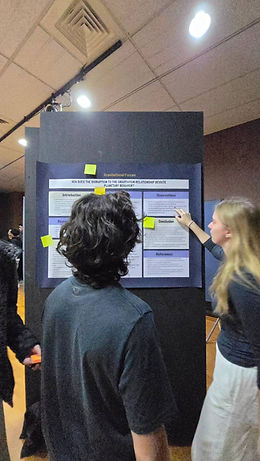
I would print these posters out and have them host a gallery walk and present their projects. Students will use sticky notes to raise questions, improvements, or praises.
SEL in the beginning of the class
team building
Fun SEL activities at the start of class can build a positive classroom culture by promoting teamwork, empathy, and connection. These short, engaging moments help students relax, collaborate, and see each other as individuals, not just classmates.
ex. Draw a picture of you doing your job 10 years later!

Focus on what students value
working together to promote greater learning
Working with different students every year has taught me how powerful it is to focus on what they value. When I connect lessons to their interests such as using basketball as a reward or weaving basketball concepts (ex. projectile motion) into teaching, it makes learning more meaningful and motivating. Tapping into what excites students helps build engagement and shows them that their passions matter in the classroom.

Archery is great for learning about forces and kinematics!

fun with waves
Use Thinking Classroom Routines
students explain in their own language
Thinking Classroom routines foster natural scaffolding and creativity by having students work in random small groups at vertical whiteboards or poster papers, where standing up keeps energy high and makes thinking visible for peer feedback. Instead of step-by-step instruction, teachers pose open, non-routine problems that require collaboration, multiple solution paths, and creativity, while encouraging students to ask peers before turning to the teacher. In 8th grade, I often modify the OpenSciEd activities into one of these thinking classroom problems. This setup promotes interaction and peer teaching as students explain and build on each other’s ideas, while the teacher circulates to probe thinking rather than provide direct answers. Public displays of work allow mistakes and strategies to be shared, normalizing risk-taking, and class reflections consolidate learning so that students grow toward independence and deeper problem-solving.


These can be conducted using whiteboards or poster paper (when the space is unavailable).